TMS therapy · Long Beach
When depression needs a different approach.
If antidepressants haven’t helped enough, TMS may offer another option. It uses focused magnetic pulses to stimulate areas of the brain involved in mood.
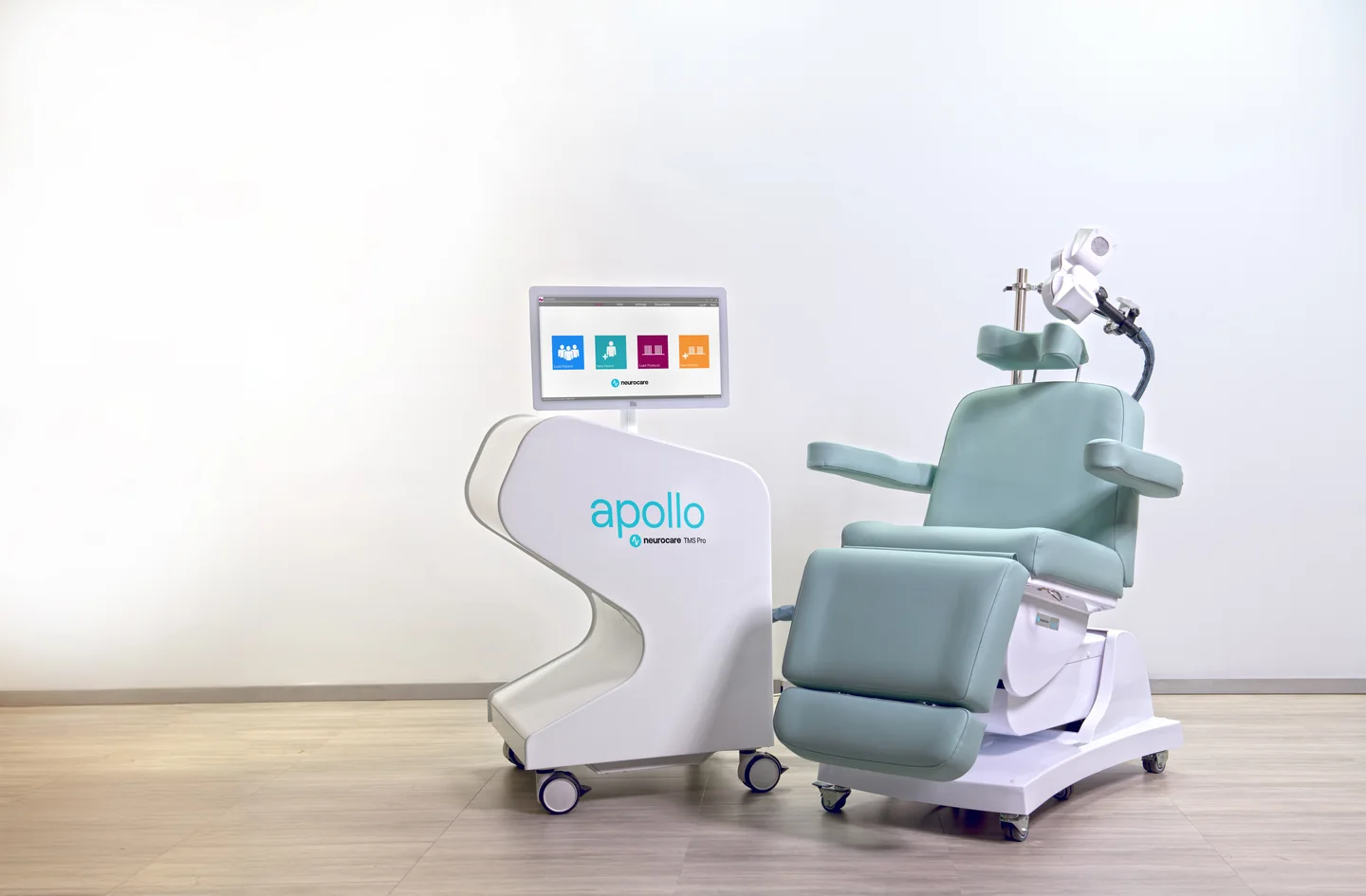
Meet Apollo, the TMS system we use at NeuPath.
- You stay awakeNo anesthesia or surgery.
- A focused treatmentA coil rests near your scalp.
- A series of visitsYour schedule is personalized.
- A clinical decisionStart with an evaluation.
Meet Apollo
A small coil.
A focused approach.
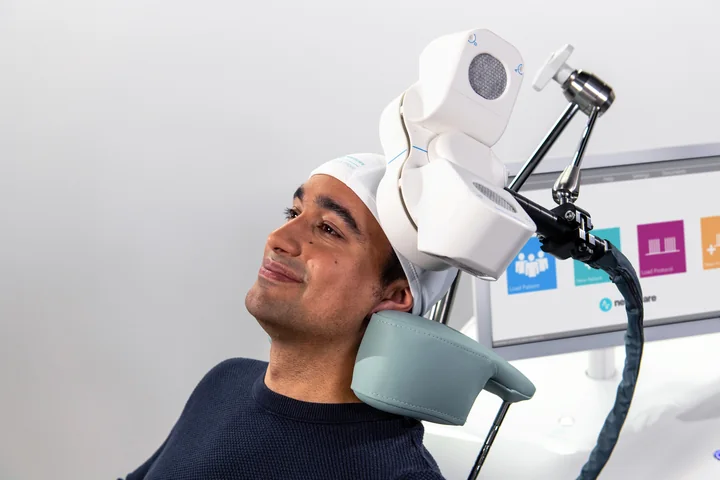
The name is long: transcranial magnetic stimulation. The idea is easier to picture. While you sit in a treatment chair, a coil delivers brief magnetic pulses to a targeted area of your brain.
The Apollo system lets the treatment team set and deliver your prescribed stimulation. Before treatment begins, your clinician determines the appropriate location and intensity for you.
You may feel tapping on your scalp and hear clicking from the coil. You remain awake and wear hearing protection. Tell your team about any discomfort so they can respond.
What does TMS feel like? →Further reading: NIMH’s guide to brain stimulation therapies.
Our treatment room
The actual chair,
in our Long Beach clinic.
The photos above are from the manufacturer. This is the real treatment chair in our clinic, by the window, where your sessions take place. You sit upright and stay awake the whole time.
See the Long Beach clinic →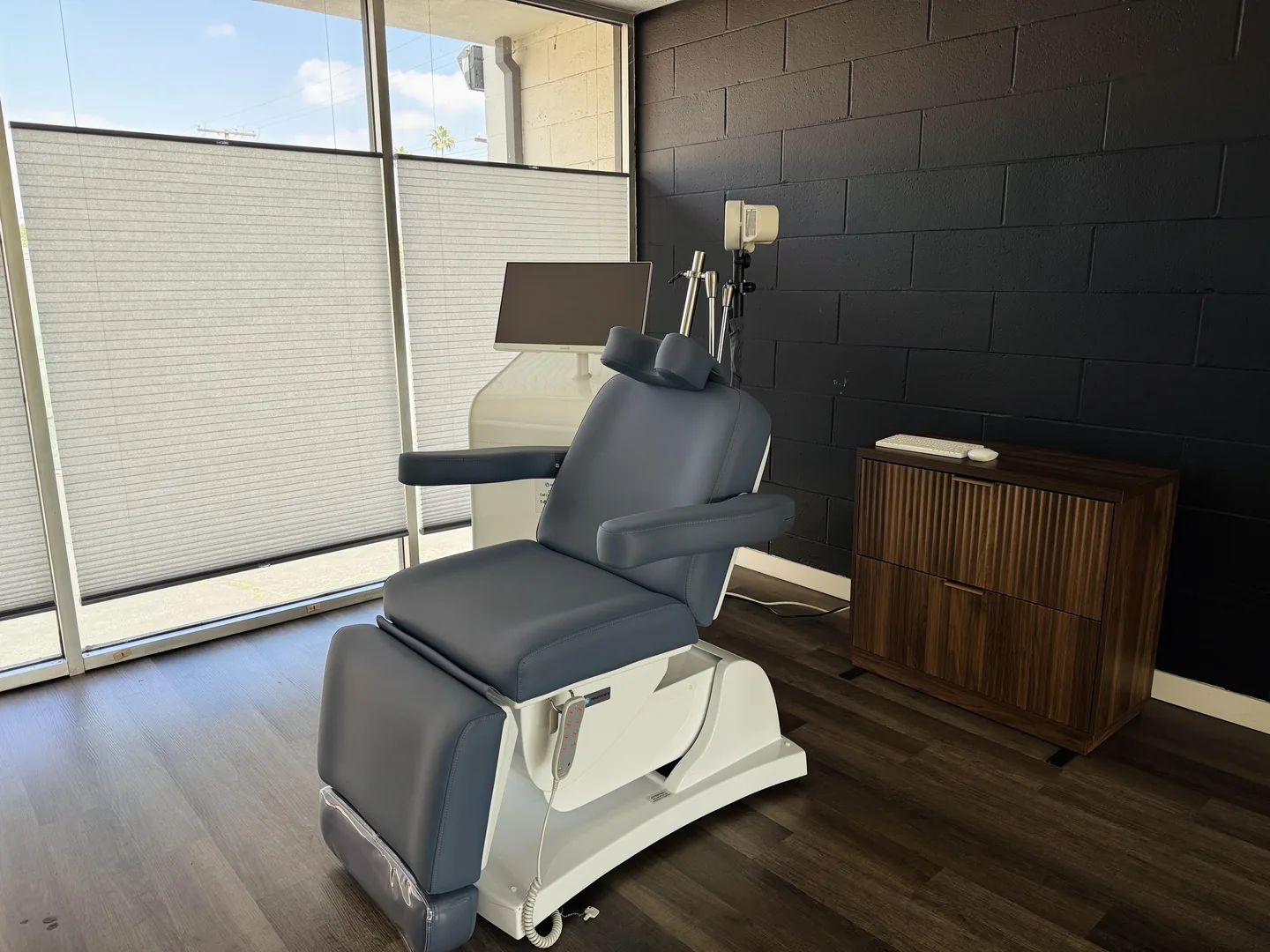
See the treatment explained
See TMS
in action.
Watch neurocare’s TMS explainer for a visual introduction to the treatment.
Manufacturer education, not a promise of individual results. Your clinician will explain your own treatment plan.
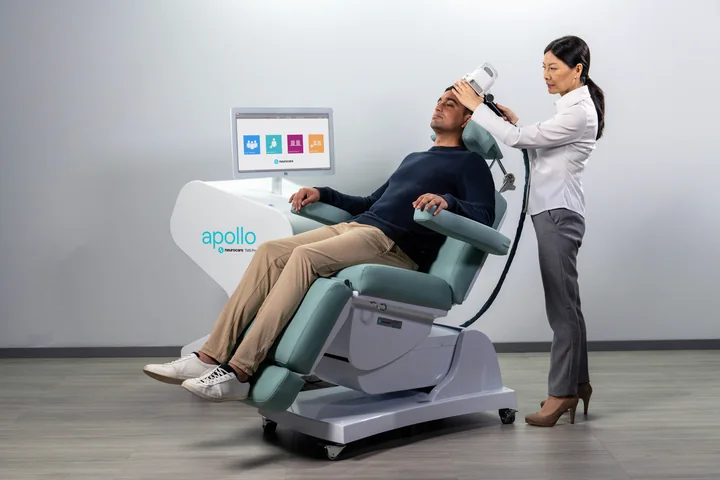
Play loads YouTube, which may collect viewing data. Photo supplied by neurocare; not NeuPath patients or staff. Open video on YouTube ↗
From questions to a care plan
You don’t have to figure this out alone.
The first step is a conversation about how you’re feeling and what you’ve already tried. You do not need to know whether TMS is right for you before reaching out.
Meet your care team →Understand your options
Your clinician reviews your symptoms, treatment history, medications and health, including any implants or seizure history. Together, you discuss whether TMS makes sense.
Know what to expect
If TMS is recommended, we discuss your treatment schedule and check insurance benefits. Ask about expected costs before committing to care.
Begin, then check in
Your team finds the treatment location and stimulation intensity. A course usually involves repeated weekday visits over several weeks, with progress reviewed along the way. Your exact schedule depends on the prescribed protocol.
Clear answers
Questions worth asking.
Benefits, risks, time and cost all matter. Bring your questions to the consultation.
Who might benefit from TMS?
TMS may be an option for major depression when antidepressant medication has not provided enough improvement. Your diagnosis, prior care and medical history all shape the recommendation. Treatment can be part of a broader plan that includes medication or psychotherapy.
Some Apollo protocols also have FDA clearance for OCD or adolescent depression. Ask our team about age eligibility and the specific treatment available for your situation.
What are the side effects?
Scalp discomfort, headache and facial muscle twitching can occur. Serious risks are rare but include seizures; hearing protection is important. Tell your clinician about implants, seizure history, bipolar disorder and all medications before treatment.
Will it work for me?
Some people experience meaningful improvement; others do not. FDA clearance is not a guarantee of results. Your team should discuss realistic expectations and review how you respond during care.
How much does treatment cost?
Coverage and out-of-pocket costs depend on your insurance, diagnosis and treatment history. Our team can help check benefits and explain next steps. A benefits check does not itself guarantee coverage.
What is Apollo cleared to treat?
FDA records describe specific uses of the Apollo TMS Therapy System. These are device indications, not a promise that every protocol is appropriate or available for every NeuPath patient.
- K243539: adult depression and OCD (FDA PDF). Major depression after insufficient improvement with antidepressant medication in the current episode; adjunctive treatment for adult OCD.
- K243700: adolescent depression (FDA PDF). Adjunctive treatment for major depression at ages 15–21.
Your clinician confirms eligibility and the appropriate device configuration and protocol.
Your next step
Start with your questions.
Tell us a little about what you’re looking for. Our Long Beach team can explain the evaluation, insurance and scheduling, so you can decide what comes next.
Looking for another approach? Explore treatment options.